
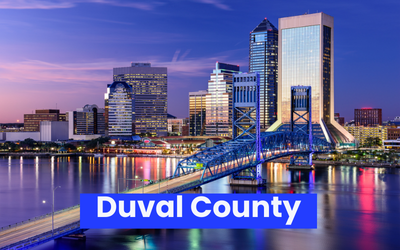
Pros and Cons of Living in Duval County, Florida
When most people picture Florida living, they imagine palm trees, beaches, and sunny days – but Duval County gives you that with a twist. This isn’t a tiny coastal community or a single tourist hotspot. This is home to Jacksonville, the largest city by land area in the continental United States, and a county that blends urban energy with coastal calm in ways that surprise newcomers.
Here, you can watch an NFL game downtown on Sunday, take a sunrise walk on Jacksonville Beach Monday morning, and then spend Tuesday evening kayaking along the St. Johns River. Duval’s size means you’ve got options – whether you want a high-rise condo, a suburban family home, or a quiet acre outside the city.
However, being big and diverse comes with its own trade-offs. With so much ground to cover, not every part of Duval feels the same. Some areas are booming with new development, while others hold tight to their historic charm. And like every Florida county, it has both its perks and its challenges – the kind you’ll want to know before making a move.
Let’s break it down.

Where Duval Actually Is (and Why That Matters)
Duval County is located in Northeast Florida, bordering the Atlantic coast and sharing borders with Nassau, St. Johns, Clay, and Baker counties. Its crown jewel, Jacksonville, sprawls across nearly 875 square miles – making it not just the largest city in Florida, but the largest in the contiguous U.S. by land area.
That size means Duval contains an incredible range of environments. You’ve got miles of oceanfront in Jacksonville Beach, Neptune Beach, and Atlantic Beach. You’ve got riverfront neighborhoods along the wide, slow-moving St. Johns River. And you’ve got suburban and semi-rural communities further inland, each with its own personality.
The geography here matters for more than just scenery. Duval’s location gives you easy access to Georgia (you can be in the state line area in less than 30 minutes), an international airport with direct flights to major hubs, and a strategic spot for business thanks to its port, rail, and highway connections.
And unlike some Florida counties, Duval still has room to grow – meaning more new construction options alongside its established neighborhoods.
Thinking about making Florida your home? At Find Your Florida Now, we’ll connect you with vetted, expert local real estate agents who understand your lifestyle needs. Fill out the Florida Lifestyle Match form

Overview of Duval County
With nearly 1 million residents, Duval County isn’t just growing – it’s evolving. The population growth here is fueled by a unique mix: military families from Naval Station Mayport and NAS Jacksonville, retirees drawn to coastal living without South Florida price tags, and young professionals seeking a more affordable big-city lifestyle. This diversity shapes the culture, economy, and neighborhoods in ways you can feel as soon as you arrive.
Major Cities/Towns: Jacksonville dominates the county, but it’s not one-dimensional. Jacksonville Beach, Neptune Beach, and Atlantic Beach each offer their own blend of small-town community and tourist appeal, with lively boardwalks, festivals, and local restaurants. Baldwin, on the far western edge, feels more like old Florida – quiet, rural, and deeply connected to its history.
Key Industries: Duval’s economy is one of the most balanced in Florida. Logistics and shipping thrive thanks to the Jacksonville Port Authority (JAXPORT), one of the nation’s busiest vehicle-handling ports. Healthcare is a major employer, with Baptist Health, Mayo Clinic, and UF Health anchoring the region. Finance has a strong presence, with Fidelity, Bank of America, and VyStar Credit Union headquartered or operating large offices here. Add in aerospace, manufacturing, and a healthy tourism sector, and you’ve got an economic foundation that supports job stability and long-term housing demand.
Notable Features: Beyond the 22 miles of beaches, Duval has cultural depth. The Cummer Museum of Art & Gardens offers a riverfront setting for one of the state’s most respected art collections. Kathryn Abbey Hanna Park provides 450 acres of wooded trails, freshwater lakes, and surf-friendly beaches. Sports lovers have the NFL’s Jacksonville Jaguars at TIAA Bank Field, while the Jacksonville Zoo and Gardens is consistently ranked among the best in the Southeast. Seasonal events – like the Jacksonville Jazz Festival and One Spark innovation festival – bring the community together in ways that feel distinctly local.
This is the kind of county where your daily life can shift dramatically depending on where you choose to live. You could work in a corporate office downtown, spend weekends fishing off a pier in Mayport, or paddleboard after work in the Intracoastal Waterway. And because Jacksonville International Airport is only about 20 minutes from downtown, business travelers and vacationers alike can leave work at 5:00 and still make an evening flight.
Ready to Find Your Perfect Florida Match?
Don’t leave your move up to chance. Complete our quick Florida Lifestyle Match form today, and we’ll personally connect you with the right local real estate expert for your dream lifestyle.
Pros of Living in Duval County
1. Variety of Lifestyles in One County
Few places in Florida offer the kind of lifestyle variety you’ll find in Duval. Want a sleek high-rise condo with skyline views and walkable access to coffee shops, breweries, and live music? Downtown Jacksonville and the historic districts of Riverside and Avondale deliver exactly that. Prefer a slower pace with the ocean breeze as your morning alarm? Jacksonville Beach, Neptune Beach, and Atlantic Beach have that small-town coastal charm while still offering modern amenities. If your ideal is a spacious home with a big backyard, maybe even room for a boat, the suburban communities inland give you that – and at prices that can be more accessible than Florida’s other metro coastal areas. The best part? No matter where you settle, you’re never far from the beach, the river, or downtown.
2. Lower Cost of Living Than Many Florida Metros
While Duval has its share of high-end properties, it’s generally more affordable than South Florida, the Space Coast, or even parts of Central Florida. That affordability extends beyond just home prices – property taxes here are reasonable, and Florida’s lack of state income tax means more of your paycheck stays in your pocket. For retirees, that’s more money for travel, hobbies, or upgrading your lifestyle. For professionals, it’s a chance to live near the coast without the sticker shock. Even with recent growth, Duval still offers opportunities for first-time buyers, military families, and investors looking for long-term value.
3. Strong Job Market and Economic Diversity
Duval’s economy is built on a broad base, which makes it more resilient during market shifts. The Port of Jacksonville (JAXPORT) is one of the busiest vehicle-handling ports in the nation, supporting jobs in logistics, shipping, and international trade. The military presence at Naval Station Mayport and NAS Jacksonville not only brings jobs but also steady demand for housing. Healthcare is another major employer, with world-class providers like Mayo Clinic and Baptist Health. Add in a growing finance sector, advanced manufacturing, and a steady tourism flow, and you’ve got a local job market with room for both stability and growth.
4. Access to Beaches and Outdoor Recreation
If outdoor living is your thing, Duval won’t disappoint. The county boasts 22 miles of beaches, from the lively Jacksonville Beach boardwalk to the more relaxed sands of Atlantic and Neptune Beach. Inland, the St. Johns River is a playground for boaters, kayakers, and anglers, with plenty of waterfront dining spots to enjoy after a day on the water. Kathryn Abbey Hanna Park offers 20 miles of trails for hiking and biking, a freshwater lake for paddleboarding, and some of the best surfing in North Florida. And because the county is so geographically large, you can live in a place where weekend adventures are practically at your doorstep.
5. Transportation and Travel Convenience
Jacksonville International Airport is a huge perk for travelers – it’s easy to navigate, rarely overly crowded, and offers direct flights to major U.S. cities. For those who prefer road trips, Duval’s location along I-95 means you can be in Savannah in about two hours or Orlando in under three. The I-10 corridor also connects you westward toward Tallahassee, the Panhandle, and beyond. This central position on the northern Florida coast gives you the freedom to explore without long travel days.
Wondering which Florida city or community truly fits your lifestyle? Fill out our Florida Lifestyle Match form, and I’ll personally connect you with a trusted local real estate expert in the area that’s right for you. It’s quick, easy, and the first step toward finding your perfect Florida home base
Cons of Living in Duval County
1. Spread-Out Geography Means More Driving
Here’s something most newcomers don’t realize until they live here: Duval is huge. In fact, Jacksonville is the largest city by land area in the continental U.S., thanks to the city-county consolidation. That means your “quick” grocery run, a friend’s house visit, or a trip to your favorite restaurant could be 30-45 minutes each way. Commuting across town is common, and without shortcuts like subways or light rail, you’ll be spending a lot of time behind the wheel. If you’re coming from a smaller, denser metro, this spread-out layout can be a real lifestyle adjustment.
2. Traffic Bottlenecks – Especially at the Bridges
While Jacksonville’s traffic is generally easier than Miami or Orlando, it’s not without its headaches. The St. Johns River cuts through the county, and the handful of bridges that connect the two sides can become pinch points. A minor fender-bender on the Main Street Bridge or the Dames Point Bridge can quickly turn a 15-minute drive into a standstill. If your daily commute depends on a bridge crossing, you’ll want to learn alternate routes fast – and always check traffic before you leave.
3. Public Transportation Is Limited
If you’re coming from a city with robust public transit like New York, Chicago, or even parts of Miami, Duval’s system will feel sparse. The bus network covers key areas but can be slow and infrequent, and there’s no full-scale commuter rail. Owning a car isn’t optional here – it’s essential. That means factoring in gas, insurance, parking, and maintenance as part of your living costs.
4. Hurricane, Flooding, and Storm Surge Concerns
Coastal living comes with risks, and while Jacksonville is farther north than Florida’s hurricane-prone hot spots, it’s still vulnerable. Certain neighborhoods – especially those near the river, beaches, or low-lying inland areas – are prone to flooding during heavy rain or storm surge. If you buy in these zones, you may need flood insurance, which can add significantly to your monthly housing costs. It’s also worth asking your agent about historical flooding patterns before making an offer.
5. Big Variations Between Neighborhoods
Because Duval covers such a massive area, there’s a huge range in neighborhood character, school quality, and property values – sometimes within the same zip code. You can have a historic, walkable district with great restaurants just a few miles from a neighborhood that’s still developing basic amenities. For newcomers, this makes local guidance essential. Without it, you could easily buy in an area that doesn’t match the lifestyle you were expecting.
Who Duval County Is Best For
Duval County is ideal for people who want options without the price tag of South Florida’s hottest markets. If you’re a professional, the job diversity here – from finance to logistics to healthcare – means you can advance your career without feeling locked into one industry. For military families stationed at Naval Station Mayport or NAS Jacksonville, the county offers plenty of neighborhoods within a short commute, plus strong community support for service members.
Retirees often gravitate here for the combination of coastal living, cultural amenities, and relatively lower housing costs compared to other major Florida metros. Whether it’s catching a performance at the Florida Theatre, exploring the art scene in Riverside, or spending mornings walking the beach, the lifestyle can be as active or as laid-back as you want.
Outdoor lovers will appreciate the mix of Atlantic beaches, riverfront parks, and inland preserves – perfect for boating, fishing, hiking, or simply enjoying the view. And for those who value travel flexibility, Jacksonville International Airport makes weekend getaways or family visits up the East Coast simple. If you like having both saltwater and freshwater adventures within 30 minutes, Duval delivers.
If Duval County sounds like your kind of Florida living, let’s find the perfect spot for you – whether that’s a historic bungalow, a beachfront condo, or a suburban home with a backyard big enough for weekend barbecues. Fill out our Florida Lifestyle Match form today, and we’ll connect you with a vetted local agent who knows the area inside and out.
Adam Miller | The 941 Lifestyle Group | Real Broker, LLC
Florida Real Estate Agent helping buyers and sellers across the state since 2013. Based in Lakewood Ranch with a trusted statewide network.